
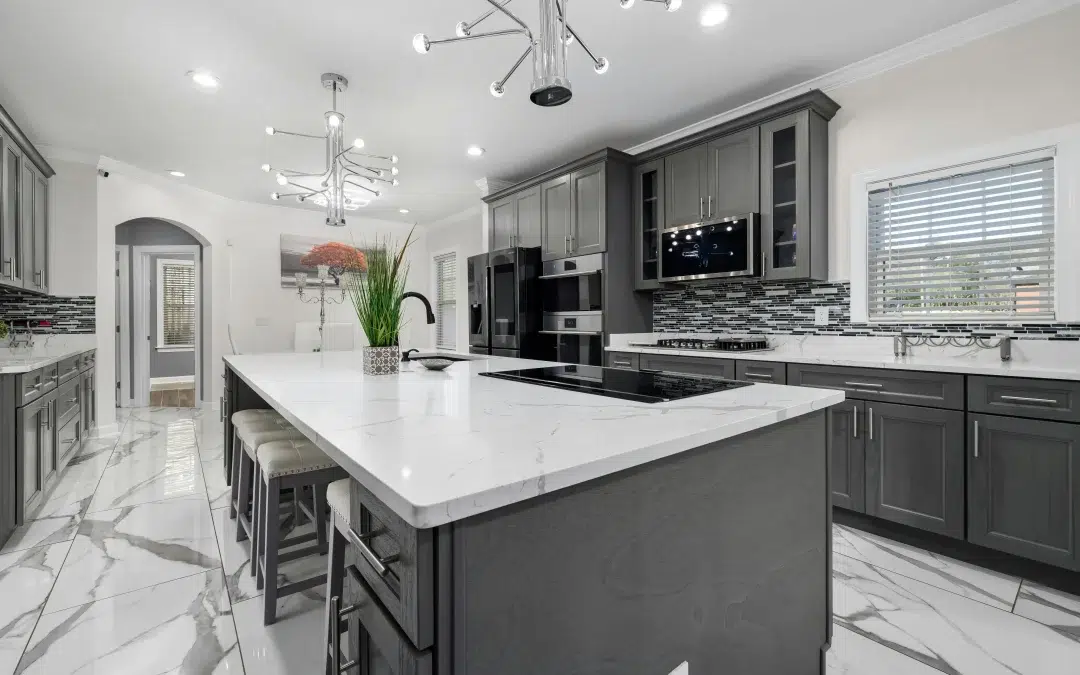
There is usually a moment in most kitchen projects where the decision shifts.
It stops being about what looks good in a sample and starts becoming about what will actually hold up. Not just in the first few months, but after years of use, cleaning, and day-to-day wear.
That is often where quartz kitchen worktops come into the conversation.
Not because they are the most dramatic option, but because they tend to remove uncertainty. For many homeowners, and increasingly for commercial clients such as bespoke kitchen companies, that reliability carries more weight than appearance alone.
Built Around How Kitchens Are Really Used
Kitchens in the UK are rarely light-use spaces. They carry everything from quick weekday meals to heavier, more frequent use in shared or commercial environments. Spills happen, surfaces get wiped constantly, and there is very little room for materials that need careful handling.
Quartz worktops are designed with that in mind. They are non-porous, which means liquids sit on the surface rather than soaking in. In practical terms, that reduces the risk of staining from things like oils, wine, or acidic ingredients. This is especially useful in smaller spaces where surfaces are used more intensively, something we explore further in our guide to maximising small kitchens with quartz worktops.
In larger projects, this consistency becomes even more valuable. Whether it is a multi-unit development or a hospitality space, having a surface that behaves the same way across every area removes a lot of guesswork.
It is worth being clear, though, quartz is not completely without limits. Direct heat can cause issues over time, so simple habits like using trivets still matter. It is a small adjustment, but one that is better understood early.
Low Maintenance, Without the Ongoing Trade-Offs
One of the quieter advantages of quartz kitchen worktops is how little they ask for in return.
Unlike some natural stones, quartz does not need sealing. There is no ongoing maintenance schedule to keep it performing as it should. For most people, cleaning stays simple and consistent.
That becomes more noticeable in high-use settings. In places where surfaces are used constantly, the ability to clean quickly and move on is not just convenient, it is necessary.
There is also a hygiene benefit here. Because the surface is non-porous, it is less likely to harbour bacteria. That is one of the reasons quartz is often specified in environments where cleanliness is part of the brief, not an afterthought.
If you are looking at this from a hospitality perspective, check out our blog on how quartz performs in hotel environments.
Design That Feels Considered, Not Unpredictable
Quartz gives a level of control that natural materials sometimes cannot.
You are not working around variations in slabs or hoping tones will match across a larger space. What you choose is what you see carried through the project, which is particularly useful when consistency matters.
That flexibility also allows quartz to work across different types of spaces. Neutral tones create a quieter backdrop for residential kitchens, while more defined veining can bring structure to commercial interiors where design needs to feel intentional.
Finishes play their part too. Matte surfaces tend to soften everyday marks, while polished finishes offer a sharper, more reflective look. In high-use areas, these small decisions often make more difference than people expect.
Why It Continues to Be Chosen
Quartz has become one of the most widely used worktop materials in the UK, not because it tries to do everything, but because it does a few things consistently well.
It reduces maintenance. It offers predictable results. It performs in both residential and commercial environments without needing constant attention.
For most projects, that balance is what matters.
If you are weighing up whether quartz worktops are the right fit for your space, speak to our team. We will help you look at it properly, based on how the kitchen will actually be used, not just how it looks on day one.