

By the time kitchen worktop installation takes place, most clients have already invested months into planning cabinetry, appliances and layout. What often gets underestimated is how technical the final stage really is.
At Marble Supreme, installation is treated as a precision process, not a final add-on. The accuracy of the template, the quality of fabrication, and the way the material is handled on site all determine how that surface performs five or ten years from now.
If you are researching how to fit kitchen worktops, this guide explains what actually happens in a professional stone installation and why each stage matters.
Cabinet Preparation Comes First
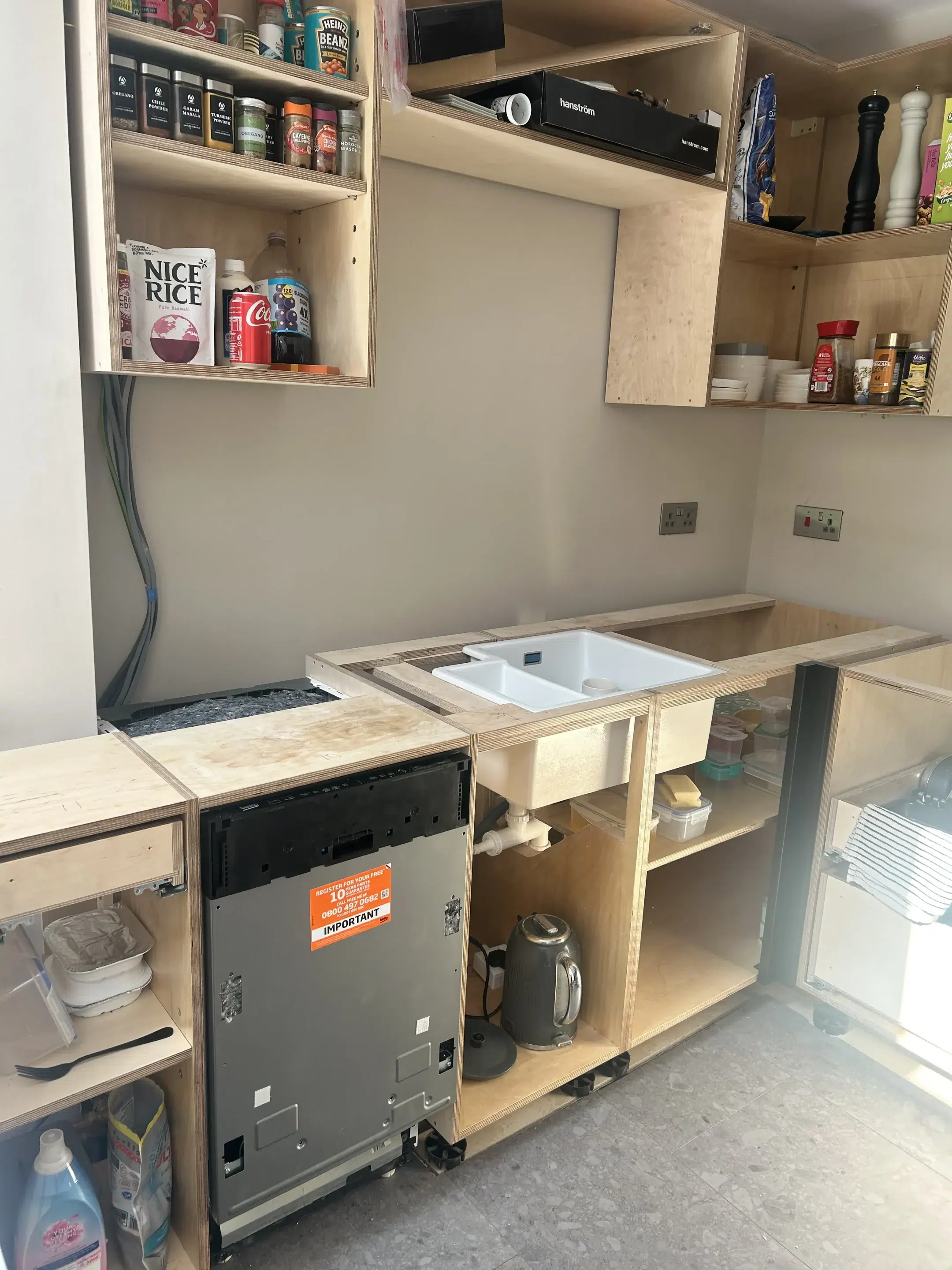
That includes:
- Base units levelled and fixed
- End panels and fillers completed
- Sink and hob models confirmed
- Appliances positioned or finalised
Once the stone surface is fabricated, it cannot be bent to compensate for uneven units. If cabinets are slightly out of level, it will show immediately once a rigid quartz, granite or porcelain surface is installed.
Especially in older properties, walls are rarely straight. If the cabinetry has not been carefully scribed to the wall, the templated shape will follow any inconsistencies. That is not a stone fault. It is a preparation issue.
This is why kitchen worktop installation always begins with reviewing the groundwork.
Digital Templating: Where Accuracy Is Locked In
Once cabinets are ready, the next stage is professional templating. Digital laser templating is typically used to capture:
- Exact wall lines
- Cut-outs for sinks and hobs
- Overhang dimensions
- Joint positions
- Upstands or splashbacks
This is not simply measuring. It is a design confirmation.
For example:
- Where will joints fall in relation to veining?
- Is there sufficient support around a large undermount sink?
- Will a waterfall end align visually from top to bottom?
Most long-term installation issues originate here, not during fitting. A poorly positioned joint or insufficient support around a cut-out can compromise both appearance and durability.
For clients comparing materials, this is also where suitability is confirmed. If you are unsure about performance differences, our guide on Quartz and Granite Worktops explains how each behaves in real kitchens.
Workshop Fabrication: Turning Slabs into Surfaces
After templating, the slab returns to the workshop for fabrication. This stage includes:
- CNC cutting to exact dimensions
- Edge profiling and polishing
- Sink and hob cut-outs
- Preparing joints
- Finishing visible edges
Material choice affects how this is handled.
Quartz is engineered and consistent, which makes it predictable during machining. Granite varies naturally and must be inspected carefully before cutting. Marble requires a more considered approach due to its softer composition. Porcelain, while highly durable in use, demands precision during fabrication.
Edge detail is often underestimated. In practice, it is one of the most visible elements in a finished kitchen. A clean pencil edge or subtle chamfer can elevate the overall look without drawing unnecessary attention.
For inspiration on finished installations, you can view recent projects in our Gallery.
Delivery and Handling on Site
Stone is heavy and rigid. A single slab can weigh several hundred kilograms. That is why professional installers are more than a want.
Professional installers are well-trained to transport slabs vertically to minimise stress and use specialist lifting equipment to manoeuvre them safely into position.
Access planning matters. Tight hallways, stairs or new flooring should be considered in advance. This stage is about safety as much as precision.
In high-value residential projects and commercial fit-outs, careful handling protects not just the material but the wider space.
Kitchen Worktop Installation: Positioning and Jointing
Once on site, installation begins methodically.
Worktops are:
- Positioned and dry-fitted
- Checked for level
- Jointed using colour-matched adhesives
- Secured appropriately
Joint alignment is particularly important with veined materials. Even a small misalignment becomes visible under natural light.
Large islands or waterfall ends require exact vertical and horizontal alignment. A few millimetres of variation can disrupt the overall aesthetic.
This is where experience matters. Kitchen worktop installation should feel calm and controlled. Rushed fitting leads to visible joints, uneven overhangs or long-term stress points.
Finishing, Sealing and Aftercare
After fitting:
- Surfaces are cleaned
- Sealants are applied where required
- Care guidance is provided
Natural stone, such as granite or marble, may require sealing. Quartz generally does not. Porcelain offers excellent stain resistance but still benefits from sensible use.
Stone surfaces are durable, but they are not indestructible.
For example:
- Direct heat on marble can cause thermal shock
- Heavy impact near sink cut-outs can create stress fractures
- Harsh chemicals can dull natural finishes
Longevity depends on both installation quality and everyday care.
If maintenance is a concern, our blog on worktop care and heat resistance provides practical guidance on protecting your surface over time.
How to Fit Kitchen Worktops: When Professional Installation Is Essential
Searches for “how to fit kitchen worktops” often come from homeowners exploring DIY options.
While laminate worktops can sometimes be installed independently with the correct tools and experience, stone worktops are entirely different.
Professional kitchen worktop installation requires:
- Specialist templating equipment
- CNC fabrication
- Structural understanding of load and support
- Safe handling processes
Cutting or modifying stone on-site without proper equipment risks damaging the slab and compromising safety.
In most serious renovation projects, professional installation protects both the material investment and the integrity of the wider kitchen design.
Installation Is About Long-Term Confidence
A worktop is used daily. It carries weight, absorbs impact and defines the visual tone of the room.
Poor installation can result in:
- Stress cracks near sinks
- Weak joints
- Uneven overhangs
- Premature movement
Well-executed installation should not draw attention to itself. It should simply feel right. Level. Balanced. Considered.
At Marble Supreme, every project is approached with that long-term view. The goal is not speed or volume. It is craftsmanship, durability and confidence in the final result.
Planning a Kitchen Renovation?
If you are considering new quartz, granite, marble or porcelain surfaces and would like clarity on suitability, installation process or lead times, our team can guide you through the right option for your project.
Quality installation begins long before the slab arrives. It starts with the right advice and the right process from day one. Speak to our team today.